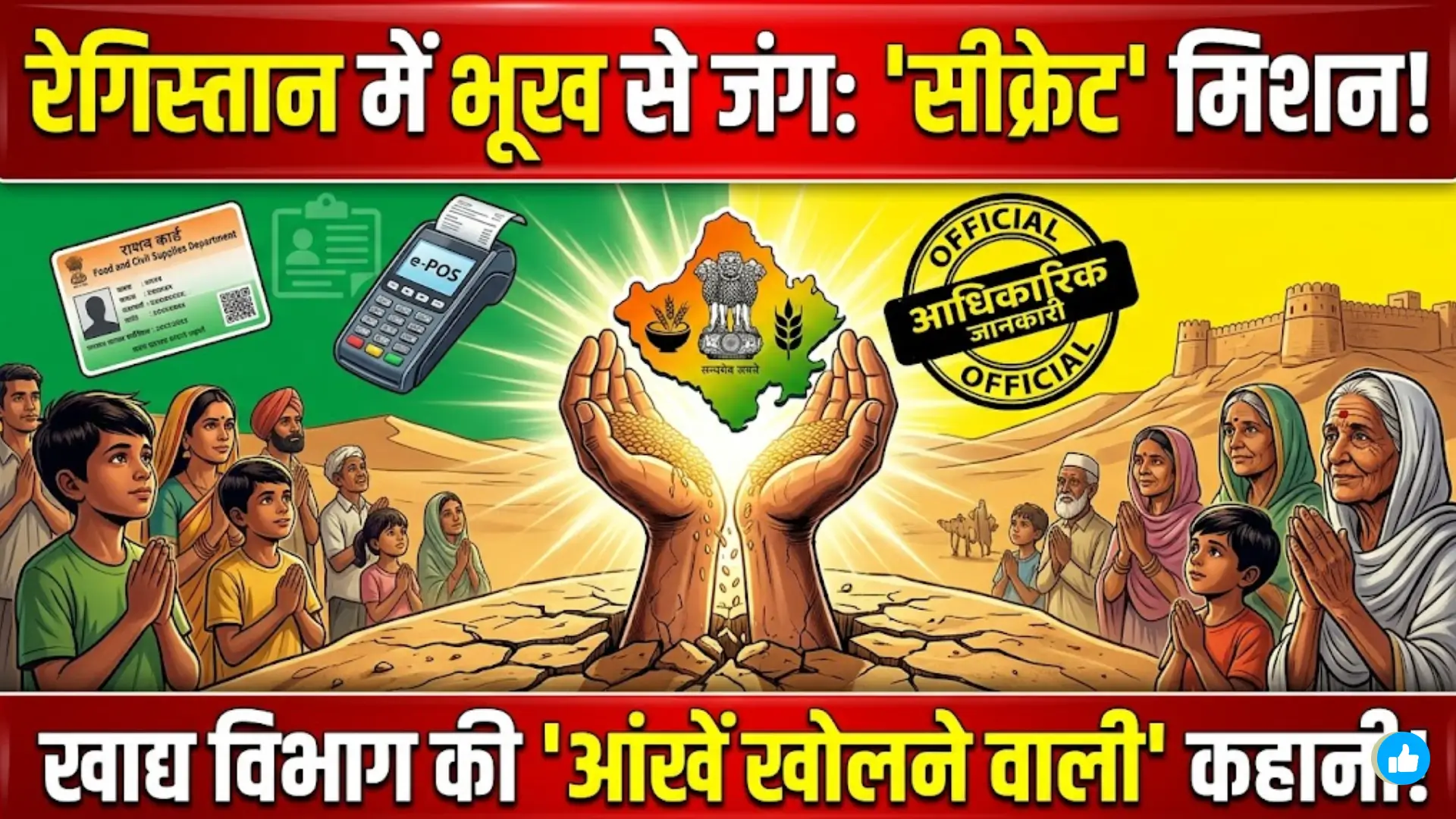
Desert Nutrition Mission
Desert Nutrition Mission: Rajasthan, the largest state of India by area, is widely known for its majestic forts, vibrant culture, and expansive desert landscapes. However, behind this cultural richness lies a persistent challenge: ensuring food security for a population spread across arid and semi-arid regions. The harsh climate, unpredictable rainfall, and limited agricultural productivity in many parts of the state make food distribution a complex task. In such circumstances, the Rajasthan Food Department emerges as a critical institution responsible for safeguarding the food needs of millions. Its role goes far beyond simple distribution it is central to public welfare, economic stability, and social justice.
Conroe ISD SSO Portal Guide 2026: लॉगिन सिस्टम, फीचर्स और पूरी जानकारी

Historical Background and Importance
The concept of organized food distribution in Rajasthan gained importance after independence, when India began focusing on food security and poverty alleviation. Over time, with increasing population and growing demand, the system evolved into a more structured and technology-driven framework. The Rajasthan Food Department was established to regulate procurement, storage, and distribution of essential food commodities while ensuring that no citizen goes hungry.
In a state like Rajasthan, where certain regions face drought almost every few years, the importance of such a department cannot be overstated. It acts as a bridge between agricultural production and consumer access, ensuring that food reaches even the most remote villages.
Public Distribution System (PDS): The Backbone
At the heart of the Rajasthan Food Department lies the Public Distribution System (PDS), which serves as the backbone of food security in the state. Through a vast network of fair price shops (ration shops), the department distributes essential commodities such as wheat, rice, sugar, and kerosene at subsidized rates.
The PDS primarily targets economically weaker sections, including families living below the poverty line (BPL), Antyodaya Anna Yojana beneficiaries, and other vulnerable groups. This system ensures that even the poorest households can afford basic food items necessary for survival.
SSO Next Gen Login 2026: पासवर्ड-फ्री सिक्योर एंट्री सिस्टम
The scale of the PDS in Rajasthan is enormous. Thousands of ration shops operate across urban and rural areas, serving millions of beneficiaries every month. The department carefully monitors the supply chain from procurement to storage to final distribution to ensure efficiency and fairness.
Digitization and Technological Advancements
In recent years, the Rajasthan Food Department has embraced digital transformation to enhance transparency and reduce corruption. One of the major initiatives includes the introduction of digital ration cards. These cards are linked with biometric authentication systems, ensuring that benefits reach the rightful individuals.
The use of electronic Point of Sale (e-POS) machines at ration shops has significantly improved accountability. Beneficiaries are required to verify their identity using fingerprints or Aadhaar-linked data before receiving food grains. This system minimizes duplication and prevents fraudulent practices.
Additionally, online portals and mobile applications allow citizens to check their ration status, lodge complaints, and track distribution records. These innovations have made the system more user-friendly and transparent, strengthening public trust.
RajSSO Login 2026: Complete Guide to Create & Access Rajasthan SSO ID
Food Grain Procurement and Storage
Another key responsibility of the Rajasthan Food Department is the procurement of food grains from farmers. The government purchases crops like wheat at Minimum Support Price (MSP), ensuring that farmers receive fair compensation for their produce.
This procurement process serves two important purposes. First, it supports farmers financially, especially during times of low market prices. Second, it helps the government build buffer stocks, which are essential for maintaining a steady food supply throughout the year.
Storage is equally crucial. The department manages warehouses and storage facilities to preserve food grains and prevent wastage. In a state with extreme temperatures, maintaining the quality of stored grains is a significant challenge that requires proper infrastructure and management.
पासवर्ड से आगे: सिंगल साइन-ऑन (SSO) कैसे मॉडर्न ऑथेंटिकेशन सिस्टम को बदल रहा है
Focus on Nutrition and Welfare Programs
While food distribution is a primary function, the Rajasthan Food Department also plays an important role in improving nutritional outcomes. Food security is not just about availability it is also about ensuring that people receive balanced and nutritious diets.
The department works in coordination with other government bodies to support welfare schemes aimed at improving nutrition. Special attention is given to vulnerable groups such as children, pregnant women, lactating mothers, and the elderly.
Programs like mid-day meals in schools and supplementary nutrition schemes contribute to reducing malnutrition. Although these programs are often managed by other departments, the Food Department plays a supportive role by ensuring a consistent supply of food grains.
Reaching Remote and Desert Areas
One of the biggest challenges for the Rajasthan Food Department is ensuring food access in remote and desert regions. Many villages are located far from urban centers, with limited transportation and infrastructure.
Rajasthan High Court Online Services: Complete User Guide and Process
To address this, the department has developed specialized distribution strategies. Mobile ration units and decentralized storage facilities help reach areas where setting up permanent ration shops is not feasible. Local authorities and community participation also play a crucial role in ensuring smooth distribution.
Despite geographical barriers, the department strives to ensure that no region is left behind. This commitment is essential for achieving equitable development across the state.
Crisis Management and Emergency Response
The importance of the Rajasthan Food Department becomes even more evident during times of crisis. Whether it is a drought, flood, pandemic, or any other emergency, the department is responsible for ensuring uninterrupted food supply.
During such situations, the government often introduces additional relief measures, including free ration distribution. For example, during the COVID-19 pandemic, millions of people benefited from emergency food schemes that provided essential commodities without cost.
These efforts highlight the department’s role as a safety net for society. By acting quickly and efficiently, it helps prevent hunger and social unrest during difficult times.
Create SSO ID Rajasthan 2026: Complete Step-by-Step Guide
Challenges Faced by the Department
Despite its achievements, the Rajasthan Food Department faces several challenges. One of the major issues is logistical complexity. Transporting food grains across vast and often inaccessible regions requires significant resources and planning.
Corruption and leakages, although reduced through digitization, still pose a threat to the system. Ensuring complete transparency remains an ongoing effort.
Climate change is another critical concern. Rising temperatures, erratic rainfall, and frequent droughts affect agricultural production, making it harder to maintain adequate food stocks.
Population growth further increases demand, putting additional pressure on the system. Meeting the needs of a growing population while maintaining quality and efficiency is a constant challenge.
SSO vs Federation: Key Differences, Architecture, Zero Trust, and Shared Device Security Explained
Future Prospects and Reforms
Looking ahead, the Rajasthan Food Department must continue to innovate and adapt. Strengthening infrastructure, expanding digital systems, and improving storage facilities are key priorities.
Promoting sustainable agriculture and reducing food wastage can also contribute to long-term food security. Encouraging community participation and increasing awareness among citizens can enhance the effectiveness of government programs.
Policy reforms aimed at improving targeting and reducing inefficiencies will further strengthen the system. By focusing on both quantity and quality, the department can ensure a healthier future for the people of Rajasthan.
वेब सिंगल साइन-ऑन (SSO): आधुनिक डिजिटल एक्सेस के लिए सुरक्षित ऑथेंटिकेशन सिस्टम
Conclusion
The Rajasthan Food Department plays a vital role in ensuring food security and improving the quality of life for millions of people. From managing large-scale distribution systems to supporting farmers and responding to emergencies, its responsibilities are vast and complex.
In a state characterized by challenging environmental conditions, the department stands as a pillar of stability and support. Its continuous efforts to modernize, innovate, and expand its reach demonstrate a strong commitment to public welfare.
As Rajasthan moves forward, the importance of the Food Department will only grow. By addressing challenges and embracing new opportunities, it can continue to play a central role in building a hunger-free and nutritionally secure society.
You Get More Info: Rajasthan SSO ID 2026 गाइड: एक लॉगिन से सभी सरकारी सेवाएं