
SSO Validation Guide
SSO validation guide helps users understand how Single Sign-On works in OpenText ALM. It explains how users can log in once and access multiple systems without entering credentials again. This process improves security and user experience in enterprise environments.
Before enabling SSO, validating the Identity Provider (IdP) is very important. It ensures that the communication between the system and IdP is working correctly. Without proper validation, users may face login issues or failed authentication.
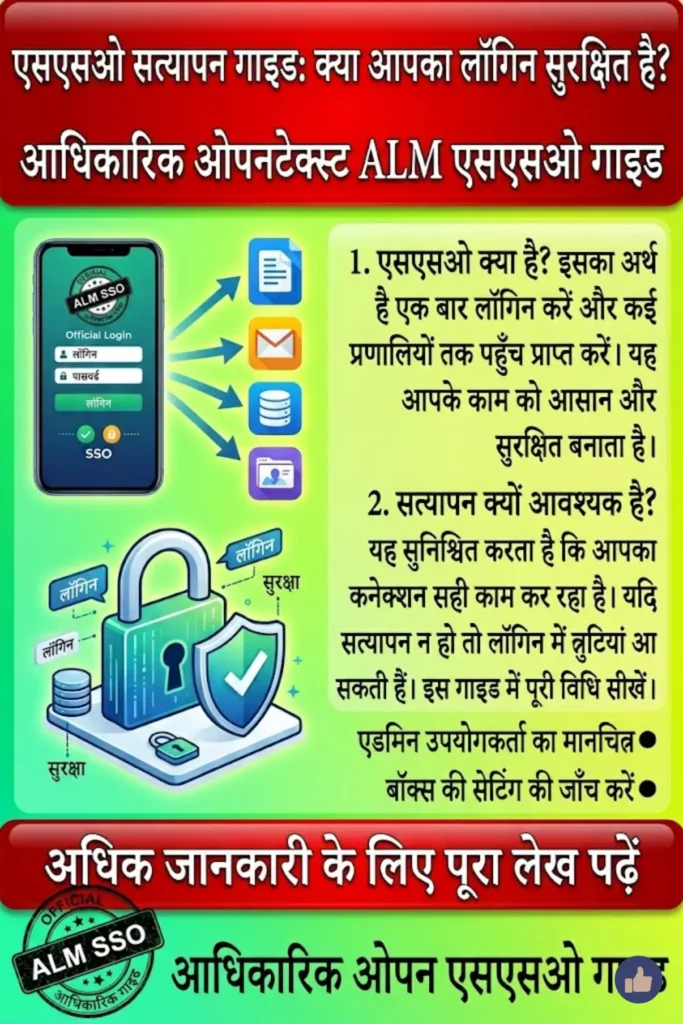
- SSO reduces repeated logins
- IdP validation ensures secure connection
- It prevents authentication errors
What is IdP Validation in SSO Validation Guide
IdP validation is the process of verifying the configuration of the Identity Provider. It checks whether the Service Provider (SP) and IdP can communicate properly. This step confirms that authentication requests and responses are correctly handled.
During validation, the system sends a request to the IdP. If the IdP responds correctly, validation succeeds. If not, errors are shown to help identify issues. This step is essential before enabling SSO.
- Verifies IdP configuration
- Confirms SP and IdP communication
- Ensures correct authentication flow
Prerequisites for SSO Validation Guide
Before starting IdP validation, some conditions must be completed. These prerequisites help avoid common errors during the validation process. Proper setup ensures smooth execution of SSO configuration.
You must ensure that at least one admin user is mapped between ALM and IdP. Also, both ALM and IdP URLs should be added to trusted sources. Missing these steps can cause validation failure.
- Map at least one site admin user
- Add ALM and IdP URLs to trusted list
- Verify system configuration readiness
How to Validate IdP Using Wizard in SSO Validation Guide
You can validate IdP using the SSO Configuration Wizard in non-SaaS environments. This wizard provides a simple interface to test the connection between ALM and IdP. It guides users step by step through the validation process.
Jan Soochna Portal Rajasthan: योजनाओं की जानकारी, लाभार्थी, पात्रता और पूरी ऑनलाइन गाइड
To validate, select the Identity Provider in the Enable SSO step. Then click Validate and log in using IdP credentials. After login, the system shows the validation result.
- Open SSO Configuration Wizard
- Select Identity Provider
- Click Validate and log in
- Check validation result
| Status | Description |
| Pending Validation | Initial stage before testing |
| Validation Success | Validation completed successfully |
| Validation Failure | Errors occurred during validation |
Remote Validation via URL in SSO Validation Guide
In SaaS environments, direct validation using the wizard is not available. Instead, you can generate a validation URL and send it to IdP users. This allows remote validation of SSO setup.
When users open the link, they are redirected to the IdP login page. After entering credentials, they see whether validation is successful or not. This method is simple and effective for distributed teams.
Single Sign-On (SSO): How SSO Works, Benefits, Authentication and Security
- Copy validation URL
- Share with IdP users
- Users log in and validate
- Optional email notifications
Enable SSO After Validation in SSO Validation Guide
After successful validation, you can enable SSO in the system. This step activates Single Sign-On for all users. It simplifies login and improves system security.
Once enabled, SSO cannot be disabled. The Enable SSO step changes to SSO Validate, and the button disappears. You can still add more Identity Providers later if needed.
- Click Enable SSO button
- SSO becomes permanent
- Add additional IdPs if required
Common Errors in SSO Validation Guide and Solutions
Users may face errors during IdP validation. These errors usually occur due to incorrect configuration or network issues. Understanding the causes helps fix them quickly.
One common issue is incorrect SP metadata or URL errors. Another issue is repeated login prompts caused by configuration settings. Each error has a specific solution.
- Check osp.api.url configuration
- Verify network connectivity
- Update incorrect metadata
- Fix configuration settings
एक से ज़्यादा SSO ID को ऑनलाइन कैसे मर्ज करें – स्टेप-बाय-स्टेप पूरी गाइड
| Error Type | Solution |
| SP metadata error | Verify correct URL and metadata |
| 401 error | Check authentication and network |
| Repeated login | Disable forceAuthAtIDP setting |
| Missing IdentityKey | Map correct IdP attribute |
How to Verify Trust Between IdP and ALM
To confirm trust between IdP and ALM, you can test using the SP URL. This method checks whether the system correctly redirects users during authentication. It is a simple way to verify setup success.
When you enter the SP URL in the browser, it should redirect to the IdP login page. After login, it should return to ALM without errors. This confirms successful communication.
- Open SP URL in browser
- Check redirection to IdP
- Confirm successful return to ALM
SSO Login Issues and Fixes in SSO Validation Guide
Sometimes users cannot log in even after enabling SSO. This usually happens due to outdated tools or configuration problems. Identifying the issue helps in quick resolution.
For example, using an old ALM Client Launcher can cause login failure. Updating to the latest version resolves the issue. Regular updates help maintain compatibility.
Single Sign-On (SSO) Trends 2026: Future of Secure Authentication Systems
- Use latest ALM Client Launcher
- Check system compatibility
- Update outdated components
Special Cases in SSO Validation Guide
In some cases, SSO can be enabled without full validation. This is possible when local authentication is enabled. It allows users to log in even if IdP validation fails.
Local authentication acts as a backup option. It helps administrators fix configuration issues without losing access to the system. This is useful in troubleshooting scenarios.
- Enable local authentication
- Use as backup login method
- Fix IdP configuration issues safely
Conclusion of SSO Validation Guide
SSO validation is a critical step in setting up secure authentication in OpenText ALM. It ensures that IdP and system communication works properly. Skipping this step can lead to login failures.
By following the correct steps and resolving errors, users can successfully enable SSO. Proper configuration improves security, user experience, and system reliability.
Platform SSO: क्या है, कैसे काम करता है, फीचर्स और macOS सुरक्षा के लिए फायदे
- Validate IdP before enabling SSO
- Fix errors using proper solutions
- Maintain updated system setup
FAQs
Q1: What is IdP validation in SSO?
It checks if the Identity Provider is correctly configured and connected to ALM. It ensures proper authentication flow.
Q2: Can SSO work without IdP validation?
Yes, but only if local authentication is enabled. Otherwise, validation is required.
Q3: Why does SSO validation fail?
It fails due to wrong metadata, network issues, or missing IdentityKey. Proper configuration fixes this.
Q4: Can I disable SSO after enabling it?
No, SSO cannot be disabled once enabled. It becomes a permanent setting.
More Info: Autodesk Single Sign-On (SSO) Setup for Educational Institutions Complete IT Admin Guide (हिंदी)